Carbon nanotube heating film is a flexible electric heating technology that uses conductive carbon nanotube networks to convert electrical energy into heat. Compared with heating structures that rely mainly on routed resistance wires, CNT films can be engineered to distribute heat across a broader surface while remaining thin and flexible.
This combination makes CNT heating technology particularly interesting for wearable heating products, therapy products, heating pads, heated eye masks, blankets and other applications where conventional rigid heating elements may be difficult to integrate.
In this guide, we explain how carbon nanotube heating film works, its key advantages, common applications and the factors OEM and ODM buyers should consider when developing a flexible heating product.
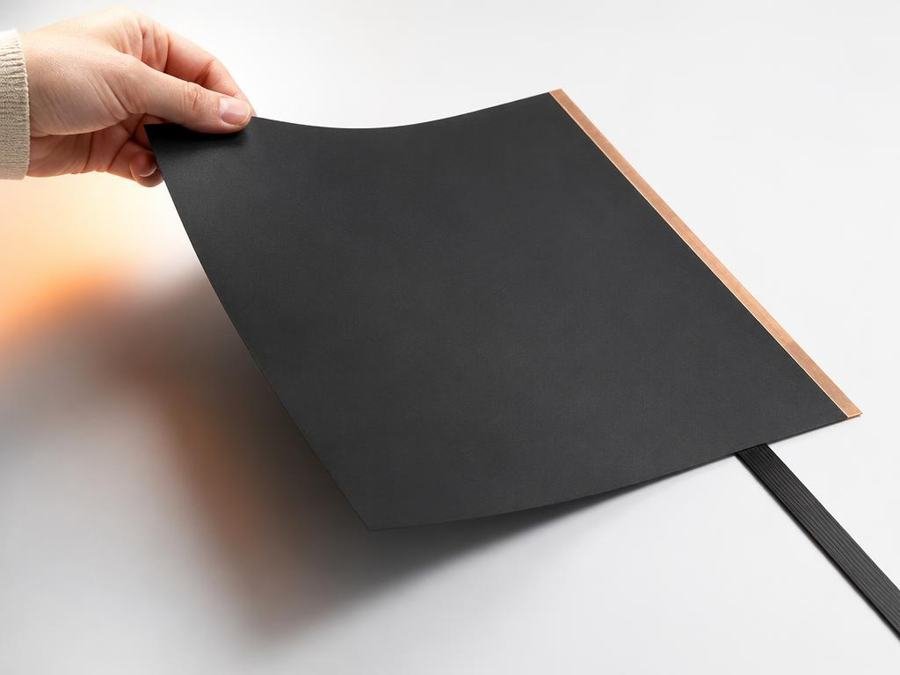
What Is Carbon Nanotube Heating Film?
Carbon nanotubes, commonly abbreviated as CNTs, are extremely small cylindrical carbon structures with useful electrical and mechanical properties.
When CNTs are formed into a conductive network or film, electrical current can pass through that network. The electrical resistance of the material converts part of the electrical energy into thermal energy through Joule heating.
The result is a thin heating layer that can be incorporated into flexible product structures.
A complete CNT heating system normally involves more than the heating film itself. Depending on the product, it may also include:
- conductive electrodes;
- insulation and protective layers;
- electrical wiring;
- temperature sensors;
- an NTC temperature-control system;
- controllers;
- power supplies;
- textile or polymer outer layers.
The final heating performance therefore depends on the design of the entire system—not only on the carbon nanotube material.
How Does Carbon Nanotube Heating Film Work?
Electrical Current Creates Joule Heating
The basic working principle is resistive heating.
When voltage is applied across the CNT conductive network, current flows through the material. Electrical resistance causes electrical energy to be converted into heat.
Research into CNT film heaters has demonstrated rapid electrothermal response and the ability to maintain heating performance while the material is bent or deformed. However, heating speed and final temperature vary significantly according to voltage, resistance, dimensions, substrate and heater construction.
This is why a finished product should be engineered around its actual operating conditions rather than a single generic temperature or heating-time specification.
Surface-Distributed Heating
One important advantage of film-based heating is the ability to create heat across an area instead of concentrating the heating element along a single routed wire.
With properly designed electrode geometry, resistance distribution and material construction, a CNT film heater can provide relatively uniform surface heating.
Uniformity remains an engineering issue, however. Electrode placement, sheet resistance, film dimensions, connection design and insulation all influence the final temperature map.
For commercial products, infrared thermal imaging is therefore useful for verifying whether a heating area is actually performing as intended.
Flexible Construction
CNT heating films can be combined with flexible substrates and laminating materials, making them attractive for products that need to bend or conform to the human body.
Published research has demonstrated CNT-based heaters designed for wearable applications and repeated mechanical deformation, including flexible and stretchable structures.
The durability of a finished heating product still depends on its complete construction, including electrodes, connectors, encapsulation and wiring.
Why Use Carbon Nanotube Heating Film?
1. Fast Thermal Response
Because the heating layer can be thin and have relatively low thermal mass, CNT heating structures can respond quickly after power is applied.
This can be useful for products that are expected to provide warmth without a long preheating period.
The exact response time should always be specified using actual product test data.
2. Broad Heating Area
Film heating technology makes it possible to design a heating zone across a surface rather than following only the path of a traditional resistance wire.
This can be useful for applications such as:
- heated eye masks;
- back and waist heating pads;
- neck and shoulder products;
- heated blankets;
- wearable heating products;
- pet heating pads;
- flexible therapy products.
3. Thin and Flexible Structure
Carbon nanotube heating film can be incorporated into products where thickness, weight and flexibility matter.
For wearable products in particular, reducing the bulk of the internal heating element can help designers create a more integrated product structure.
4. Compatible With Temperature Control
CNT film can be combined with temperature-sensing and control components such as NTC sensors.
A properly designed control system can monitor temperature and regulate electrical input according to the requirements of the finished product.
This is especially important in products that come into prolonged contact with the body.
5. Product Design Flexibility
A flexible heating layer can be developed in different shapes, dimensions, resistance specifications and heating zones.
However, CNT heating film should not simply be treated like ordinary fabric that can be cut anywhere.
Changing dimensions, electrode placement or conductive paths can alter electrical resistance and heating behavior. Custom dimensions should therefore be engineered according to the intended voltage, wattage and target temperature.
Carbon Nanotube Heating Film vs. Traditional Wire Heating
Both technologies can be useful. The better choice depends on the product.
| Feature | CNT Heating Film | Resistance Wire Heating |
|---|---|---|
| Heating structure | Conductive surface/network | Routed conductive wire |
| Heating area | Can cover a broad surface | Follows wire routing |
| Thickness | Can be very thin | Depends on wire and assembly |
| Flexibility | High with suitable construction | Depends on wire and layout |
| Shape integration | Suitable for thin flexible structures | Suitable for many conventional layouts |
| Temperature uniformity | Depends on film and electrode design | Depends heavily on wire spacing |
| Product engineering | Resistance and electrode design are critical | Wire resistance and routing are critical |
Neither technology should automatically be described as superior in every application.
For OEM development, the correct technology should be selected according to the product’s required temperature, operating voltage, flexibility, dimensions, safety requirements and manufacturing process.
Does CNT Heating Film Produce Far-Infrared Heat?
This point is worth explaining carefully.
Like other heated materials, a CNT heating surface emits infrared radiation when its temperature rises. However, statements about a specific far-infrared wavelength range, emissivity value or therapeutic effect should be supported by actual testing of the finished material or product.
The infrared performance of a heating product can be affected by:
- operating temperature;
- surface material;
- coating;
- textile layers;
- encapsulation;
- emissivity;
- measurement conditions.
Therefore, an OEM supplier should avoid turning general material properties into specific product claims without supporting data.
For commercial marketing, it is usually better to use measurable statements such as surface temperature, heating time and temperature uniformity unless far-infrared performance has been independently tested.
Common Applications of CNT Flexible Heating Technology
Carbon nanotube heating technology can be considered for a wide range of flexible thermal applications.
Heated Eye Masks
A thin flexible heater can conform to the shape of the eye-mask structure while minimizing bulk.
Heating Pads
CNT heating elements can be designed for waist, back, shoulder, neck and general warming applications.
Heated Blankets and Textile Products
Flexible heating structures can be integrated into textile layers where softness and flexibility are important.
Wearable Heating Products
Potential applications include heated garments, knee products, gloves, insoles and other personal thermal-management products.
Pet Heating Products
Flexible heating elements can also be used in heating pads and bedding systems designed for pets, provided the complete system includes appropriate insulation and temperature control.
Therapy and Wellness Products
CNT heating systems can be combined with massage, compression or other wellness-product structures where controlled warmth is required.
What Should OEM Buyers Evaluate?
Selecting a carbon nanotube heating film should involve more than comparing maximum temperature.
A professional product-development process should evaluate:
Operating Voltage
Determine whether the product will use USB power, batteries, adapters or another power source.
Power and Resistance
Film dimensions and electrical resistance should be matched to the required power output.
Temperature Uniformity
Use thermal imaging to check whether the target heating area is uniform and whether abnormal hot spots exist.
Temperature Control
Products used near the body should have an appropriate temperature-control strategy.
Mechanical Durability
Testing should reflect the actual application, including bending, folding or repeated product use.
Electrical Insulation
The heating element, electrodes, connections and wiring need to be protected according to the finished product design.
Product Compliance
Certification requirements depend on the product category and destination market. Compliance should therefore be evaluated at the complete-product level rather than assuming the heating film alone determines certification.
Carbon Nanotube Heating Film for OEM and ODM Products
For brands developing new heating products, the heating element is only one part of the final solution.
A complete development project may involve heater dimensions, resistance design, temperature sensing, controller selection, power configuration, material integration, prototypes and mass-production requirements.
FlexTherm focuses on integrating CNT flexible heating technology into customized heating products for different product structures and applications.
Instead of selecting a generic heater and forcing the product around it, OEM and ODM projects can begin with the required product size, heating zone, operating voltage and target temperature.
The heating system can then be developed around those requirements.
Frequently Asked Questions
Is carbon nanotube heating film flexible?
Yes. CNT heating films can be designed with flexible substrates and protective structures. However, the permitted bending radius and cycle life depend on the complete construction of the heater.
How quickly does CNT heating film heat up?
CNT heaters can provide a rapid thermal response, but there is no single universal heating time. Voltage, resistance, size, substrate, insulation and target temperature all affect performance.
Can carbon nanotube heating film be cut to any size?
Not necessarily. Changing the dimensions of a heating film can change its resistance and heating characteristics. The film and electrode structure should be designed for the required dimensions.
Is CNT heating film safe for wearable products?
Safety depends on the complete heating system. Temperature control, insulation, electrical design, connectors, power supply and finished-product testing are all important.
What products can use CNT heating technology?
Potential applications include heating pads, heated eye masks, blankets, wearable heating products, pet heating products and other flexible thermal products.
Conclusion
Carbon nanotube heating film offers an interesting platform for thin, flexible and surface-distributed electric heating.
Its advantages are most valuable when the heating element, electrodes, temperature control, power system and finished product are engineered together.
For brands and OEM buyers, the most important question is therefore not simply, “How hot can the film get?”
A better question is:
How can the heating system be engineered to deliver the right temperature, heating area, flexibility and control for the finished product?
That is where CNT flexible heating technology becomes a practical product-development platform rather than simply a heating material.